
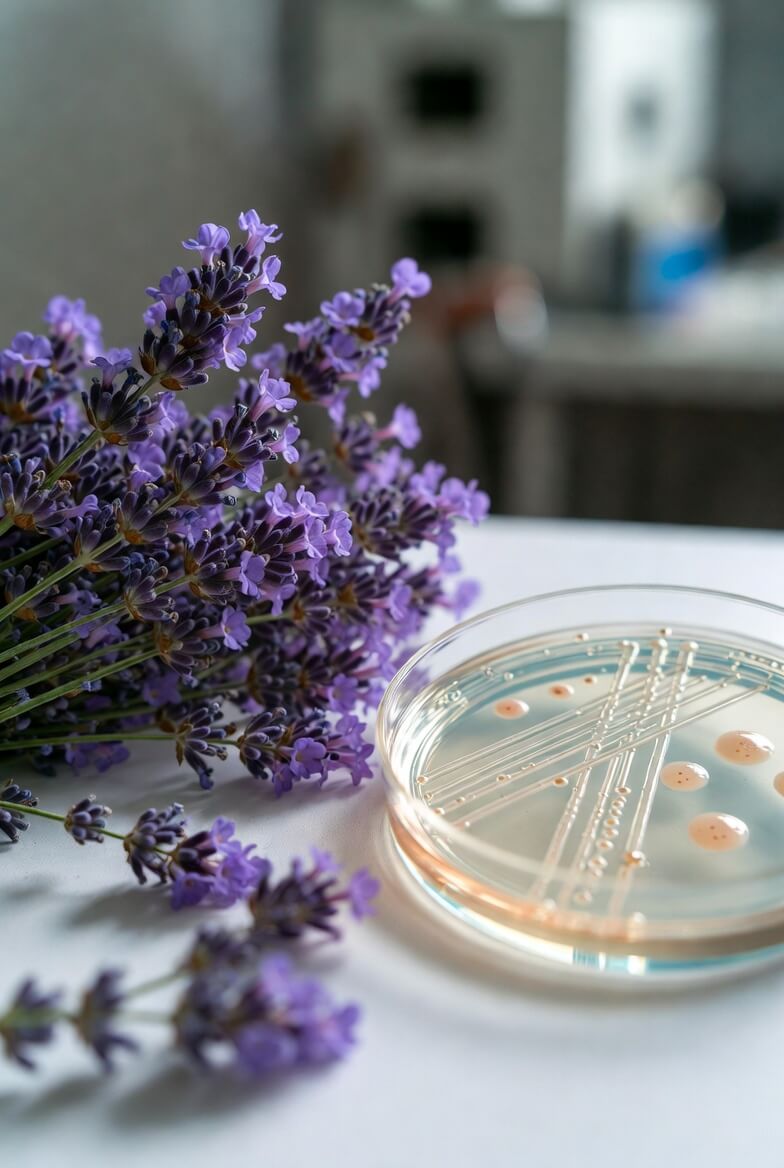
The Surprising Science and a Smart Way to Try It
We’ve all heard that what you eat shapes your gut bacteria. But what if the scents you breathe could play a role too?
It sounds futuristic, yet emerging research points to a fascinating connection: the olfactory–gut axis. When certain aromas hit your nose, they don’t just smell nice — they can influence stress, inflammation, and indirectly the trillions of microbes living in your digestive system.
The Standout Lavender Study
One of the most interesting pieces of evidence comes from a 2024 study on rats experiencing alcohol withdrawal (a stressful state that disrupts gut bacteria and mood). Researchers let the rats inhale lavender essential oil vapor daily for two weeks.
The results were eye-opening:
- Beneficial bacteria from the Muribaculaceae family, which had dropped during withdrawal, bounced back.
- The decline in Bacteroidota was prevented.
- Inflammation in the hippocampus (a brain region tied to mood) decreased significantly.
- The rats showed clear improvements in depressive-like behaviors.
This is one of the first studies to link inhaled scent directly to measurable gut microbiome shifts. While it’s an animal model, it hints at how calming aromas might create a better internal environment for good bacteria to thrive.
Other oils like peppermint, lemon, and rosemary show supportive effects in various studies (mostly oral or animal feed models), often through gentle antimicrobial action or stress reduction. But lavender remains the star for inhalation-based research.
How Does Your Nose Talk to Your Gut?
Here’s the beautiful mechanism at work:
When scent molecules reach your olfactory bulb, signals travel straight to the limbic system — the brain’s emotional control center. This quickly dials down the stress response, lowering cortisol and systemic inflammation.
With less inflammation, your gut lining relaxes, mucus production improves, and beneficial bacteria find a more welcoming home. The vagus nerve acts as a fast two-way highway, carrying signals from nose to intestines in minutes. It influences gut motility, barrier function, and microbial balance.
In short: scent → calmer brain → healthier gut environment → potential microbiome support. It’s a full mind-body-microbe loop.
Building a Supportive Daily Scent Formula
There’s no magic “perfect” blend backed by large human trials yet, but a balanced, inhalation-focused formula can combine the best of what we know:
- Lavender — The core for microbiome restoration via olfactory pathways and stress relief.
- Peppermint — Supports digestion and the gut-brain axis.
- Lemon — May help with microbial diversity and uplift.
- Rosemary — Adds gentle anti-inflammatory and prebiotic-like benefits.
Use high-quality essential oils and diffuse in short sessions to keep things subtle and effective.
How Often Should You Inhale It?
Consistency matters more than intensity. Aim for 2–3 sessions per day, each 15–30 minutes, for a total of 30–75 minutes spread out. This prevents olfactory fatigue while delivering repeated calming signals.
- Morning: Lighter, with a touch more lemon + rosemary for gentle energy.
- Midday: When stress tends to build.
- Evening: Heavier on lavender + peppermint for wind-down.
Real effects on mood and digestion often appear within 1–2 weeks of daily use; if you want deeper microbiome shifts (if they translate to humans) would likely need 4+ weeks alongside a fiber-rich, Mediterranean-style diet.
The Inhalio Advantage: Precision Through Biometric Feedback
This is where things get really exciting. Traditional diffusers blast scent constantly, which can overwhelm your nose and reduce effectiveness. Inhalio’s dry-air diffusion technology changes the game with micro-dosing — short, low-intensity pulses of scent molecules delivered cleanly, without heat or residue.
Using Inhalio’s biometric loop, the system monitors real-time signals like heart rate variability and automatically releases the right burst of your lavender blend exactly when your body needs calming support. No guessing. No constant fragrance. Just timely, intelligent aroma cues that support the emotional and physiological loop we’ve been talking about.
You can set profiles for different times of day or let the AI adapt based on context. It turns scent from a passive background into an active wellness tool — subtle, responsive, and designed for real life (whether at home, in the car, or at work).
The Bottom Line
The science is still early — mostly animal data and promising mechanisms — but the idea that everyday scents could gently support your microbiome through stress reduction is both accessible and intriguing. Pairing a thoughtful lavender-based blend with consistent, smart inhalation (especially via biometric systems) offers a low-risk way to explore this connection.
If you’re curious, start simple: try the blend a couple of times a day and notice how you feel. Your nose, brain, and gut might just thank you.
Have you experimented with essential oils and noticed effects on mood or digestion? I’d love to hear your experiences in the comments