
Scent has long shaped mood, memory, and perception.
Today, advances in artificial intelligence are transforming it from a simple fragrance into a responsive, data-driven system that can support wellness, improve shared spaces, and adapt to individual needs in real time.
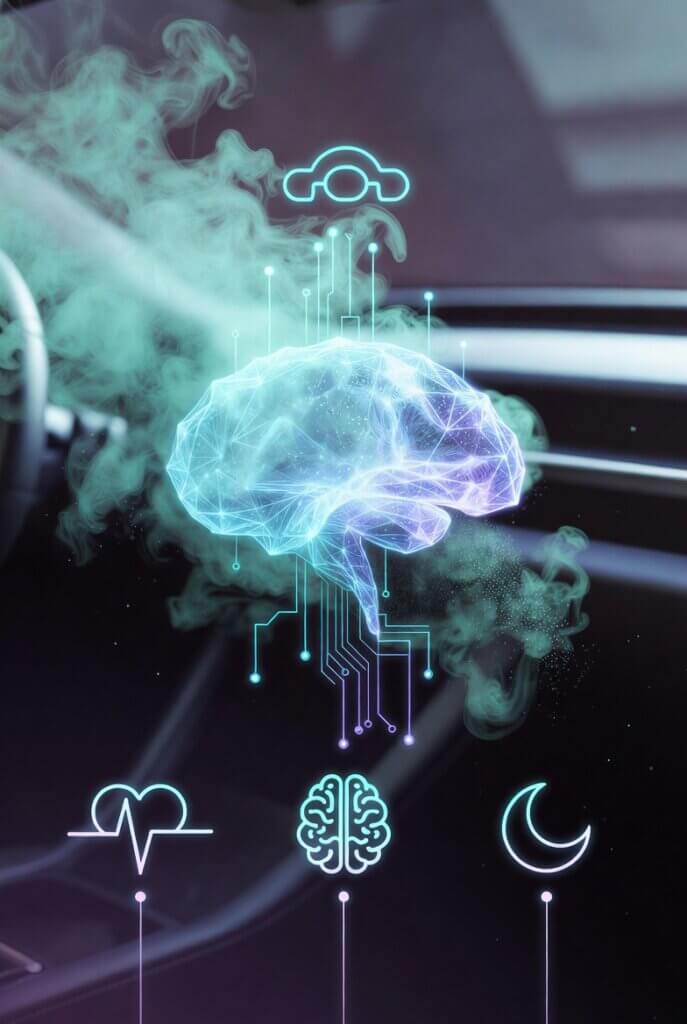
Modern digital scent systems rely on specialized AI agents, generative models, and continuous analytics. These technologies process detailed usage patterns—such as time of day, day of the week, duration, and environmental context—to generate insights and tailored recommendations. The result is scent delivery that becomes smarter with every interaction.
AI Learning from Real Behavior
Predictive analytics agents examine granular data at the ingredient level. By identifying patterns in when and how people use different scents, these systems can suggest more effective combinations and timing. Over time, this creates a clearer picture of what works for different goals and lifestyles.
Closing the Loop with Biometrics
Emotional and biometric AI enables a continuous feedback cycle. Targeted scents can be released to support outcomes such as stress reduction, improved focus, better sleep, or cardiovascular calm. When linked to wearable data and health platforms, the system tracks actual physiological responses and refines future recommendations accordingly. This closed-loop approach moves scent beyond subjective preference into measurable wellness support.
Cleaner Experiences in Shared Spaces
In mobility settings such as rideshares and fleets, dedicated AI agents can pair with odor-detection sensors. When unwanted smells like smoke or food are identified, counteracting scents are deployed to neutralize them at a molecular level. The outcome is fresher cabin air and higher passenger satisfaction without relying on constant, overpowering fragrance.
Emerging Capabilities on the Horizon
Looking ahead, several AI-driven tools are expanding what digital scent systems can do:
- Conversational voice interfaces that allow natural-language control
- Multi-modal agents that combine data from wearables, vehicle sensors, weather, and calendars to anticipate needs
- Reinforcement learning systems that continuously improve personalization based on user responses
- Safety agents that monitor allergens and potential sensitivities
- Generative models that design custom scent profiles
- Sentiment analysis that converts feedback into actionable improvements
Together these agents create an adaptive platform capable of operating across health, mobility, and everyday environments.
A New Role for Scent
When guided by intelligent systems, scent becomes more than atmosphere. It evolves into a precise, context-aware tool that can support well-being, elevate shared experiences, and generate valuable insights. As the technology matures, the intersection of AI and scent is opening practical new possibilities for personalization, comfort, and measurable benefit in daily life.